How to Become a Helicopter Pilot in Australia
Learning how to become a helicopter pilot in Australia starts with something simple: find out whether you enjoy flying. If you have never been in control of a helicopter before, you do not need to decide immediately whether you want a private licence or a professional career. A Trial Introductory Flight gives you time with an instructor, introduces the controls and lets you experience how helicopter flying actually feels before you commit to structured training.
Some people know they want to fly professionally. Others are curious about private flying or simply want to try it first. The licence decision becomes important when you are ready for regular lessons and need to plan your medical, theory, flight hours and budget.
TLDR
If you are completely new to helicopter flying, you can start with a Trial Introductory Flight. It is an introduction rather than a commitment to a Private Pilot Licence or Commercial Pilot Licence. No previous flying experience is required and there is no obligation to continue afterwards.
Once you are ready to start lessons, talk with the PHS flight training team about your goals, budget and the pathway that suits you. A Private Pilot Licence is for personal flying, while a Commercial Pilot Licence is the pathway for those wanting to fly professionally. Medical, theory, experience and flight test requirements depend on the licence you pursue. These are part of progressing towards your licence, not prerequisites for taking your first Trial Introductory Flight with PHS.
A simple way to think about the process is to take it in stages. Try flying first, start lessons when you are ready, choose the licence pathway that fits your goals, then work through the requirements that apply to that pathway.
Start by Trying Helicopter Flying
You can read about helicopter pilot training for weeks and still have no idea whether you will enjoy being at the controls. A Trial Introductory Flight is designed for that situation. PHS offers introductory flights from Moorabbin and the Gold Coast, and no previous flying experience is required. The experience begins with a briefing, then an instructor introduces the basics and gives you the opportunity to use the controls as you progress.
A TIF is optional. It is useful if you have never flown before or are unsure about training. If you have already completed one or have previous flying experience, you can speak with the training team about starting lessons. It gives beginners a practical way to try flying before making bigger licensing decisions.

Choose the Right Training School Early
Once you know you want to continue, choosing where to train matters. Your school affects the aircraft, instructor support, theory options and course planning. PHS provides helicopter flight training from Moorabbin Airport and Gold Coast Airport. Its instructors also work as pilots within the company’s wider operations.
Before enrolling, ask how often you can fly, which aircraft you will use, how weather cancellations are handled, how theory is delivered and how payments work. We offer both pay as you go training and prepaid 10 hour blocks, with current rates outlined in our Student Pilot Handbook. Ask the training team directly about lesson availability and scheduling.

When Do You Need to Choose Between a PPL and CPL
You do not need to choose between private and commercial flying before a TIF. The decision matters when you plan ongoing training because each licence has different requirements and privileges. A Private Pilot Licence, or PPL, is for private or recreational flying and does not generally allow you to earn an income as a pilot.
A Commercial Pilot Licence, or CPL, is for people who want to fly professionally. It can lead into tourism, charter, aerial work, instruction and other operations as your experience grows. PHS offers both PPL and CPL training, so the team can explain the difference before you commit to a course.
If you later change direction, do not assume all previous training will transfer automatically or that you need to start again. CASA allows training operators to assess previous training for credit. If you already hold a PPL and are considering progressing to a CPL, talk to our training team about your previous flight experience. We can review your training record and explain what you still need to complete for the commercial pathway.
What Your First Helicopter Lessons Are Like
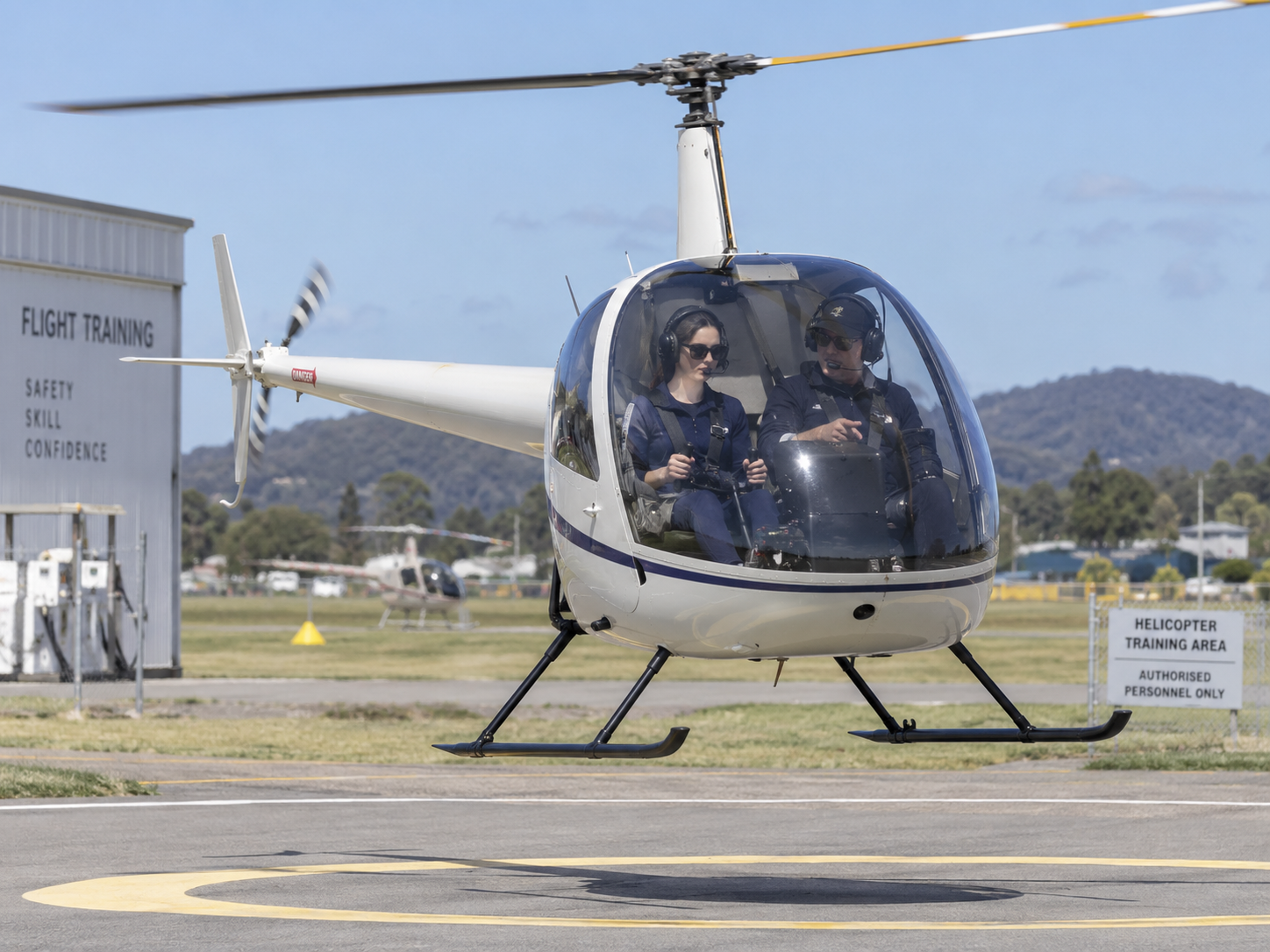
Early lessons focus on the basics: how the helicopter responds, how the controls work together and how to build coordination. Your training starts with the fundamentals, including seating position, control use and basic control movements. From there, you will progressively build your skills in aircraft handling, hovering, circuits, emergency procedures and navigation.
Training commonly uses aircraft such as the Robinson R22 and Schweizer 300CBi. Your instructor demonstrates each exercise and gives you more responsibility as you improve. Hovering often takes time to feel natural. The early goal is to build good habits before moving into more advanced exercises.
Sort Out the Medical at the Right Stage
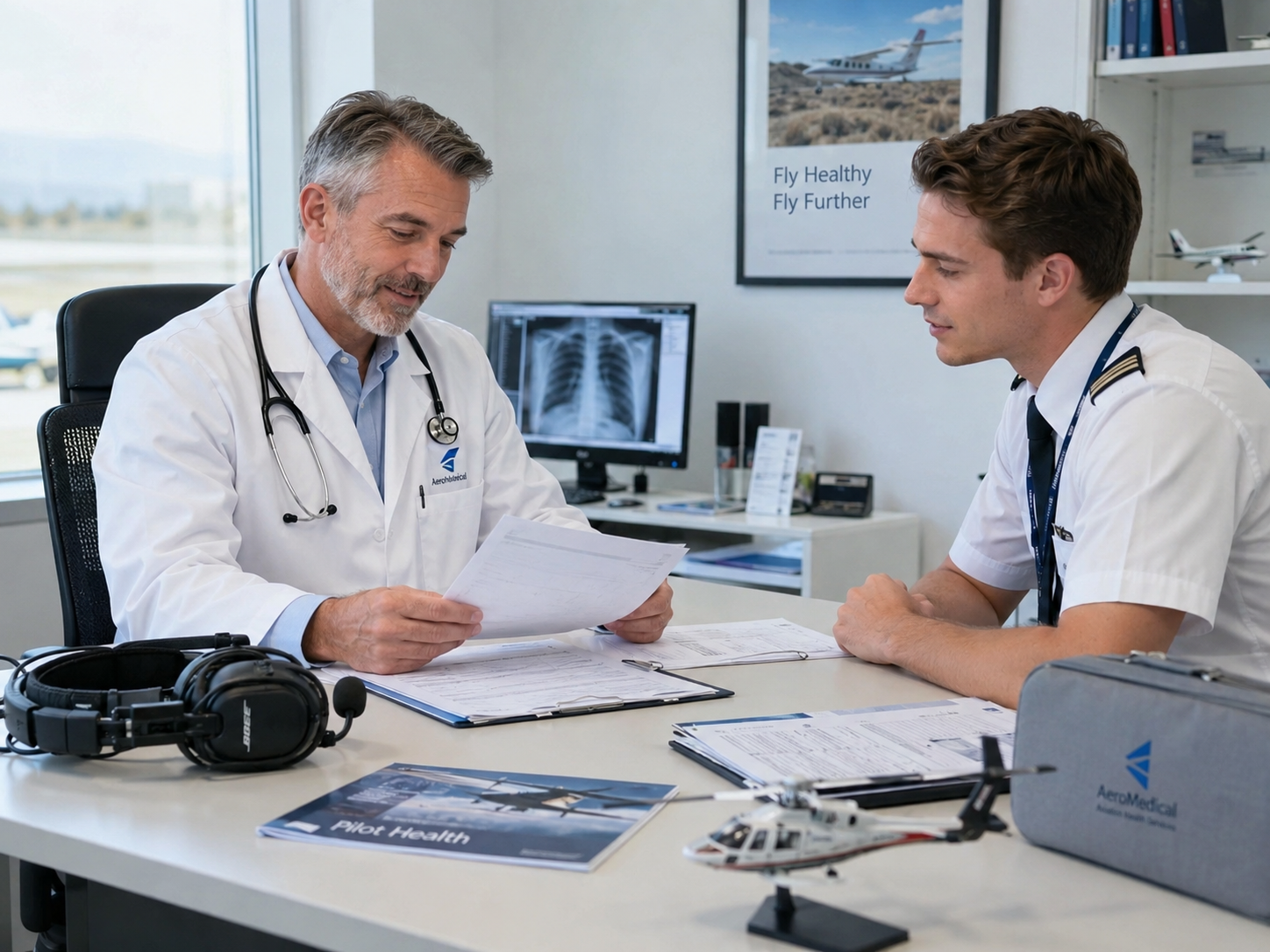
A medical is not something a complete beginner needs before trying a TIF. We do not require an aviation medical for a Trial Introductory Flight. Once you pursue a licence, medical requirements become important and differ between private and commercial pathways.
For a PPL, CASA specifies the medical certificates that can be used for the private licence flight test. If commercial flying is your goal, investigate the medical side early. CASA requires a Class 1 medical certificate for the CPL flight test, so it makes sense to confirm this before investing heavily in commercial theory and training.
Having a medical condition does not automatically mean you cannot fly. Aviation medical decisions depend on the condition, the associated risk and any restrictions that may be required. CASA and a designated aviation medical examiner are the appropriate sources for advice about your individual circumstances.
Theory Depends on the Licence You Choose
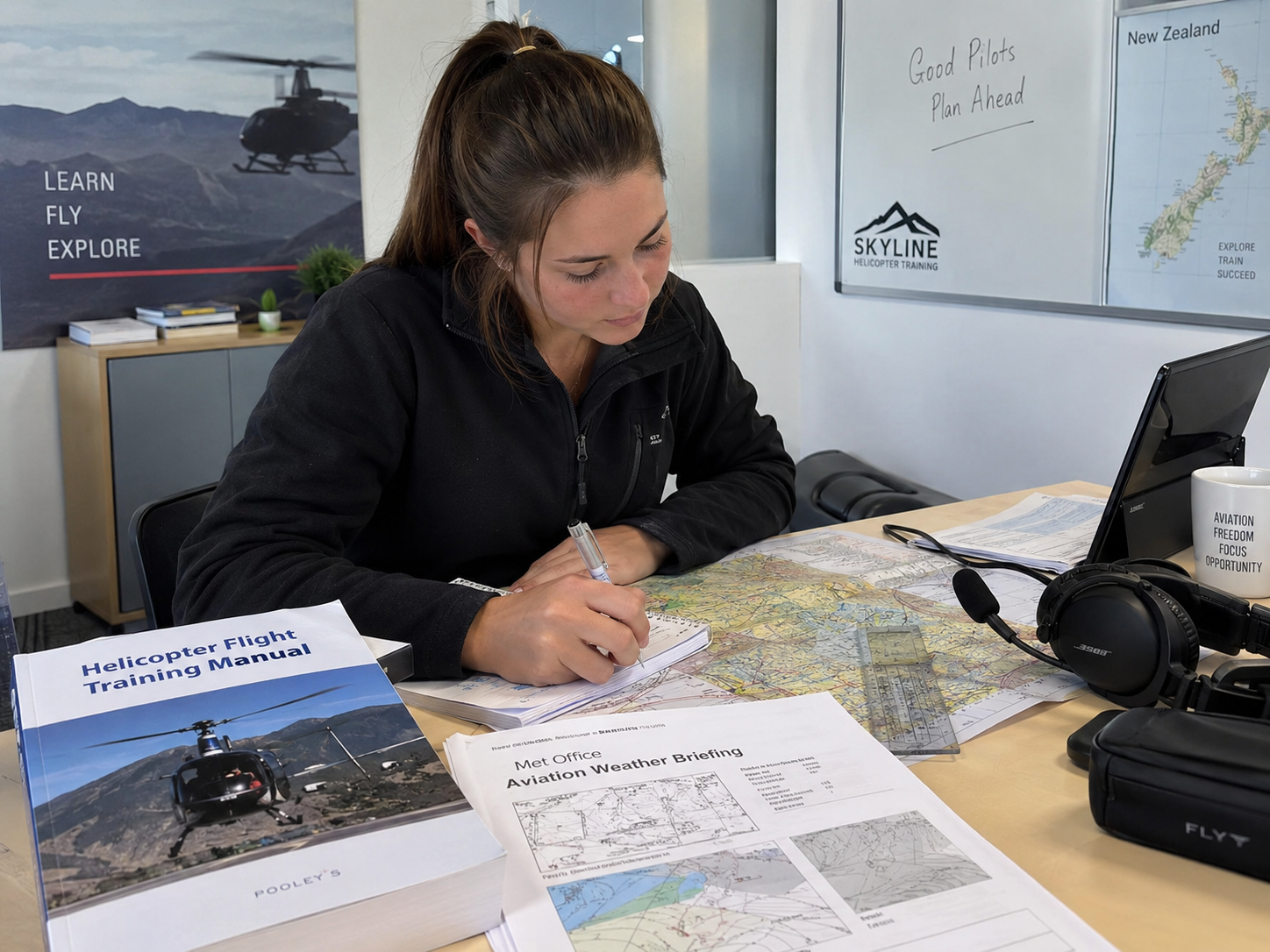
The theory requirements are another reason to keep private and commercial training clearly separated. Private helicopter students do not complete the same seven CPL subject exams. CASA has a specific PPL helicopter aeronautical knowledge exam for the private licence pathway.
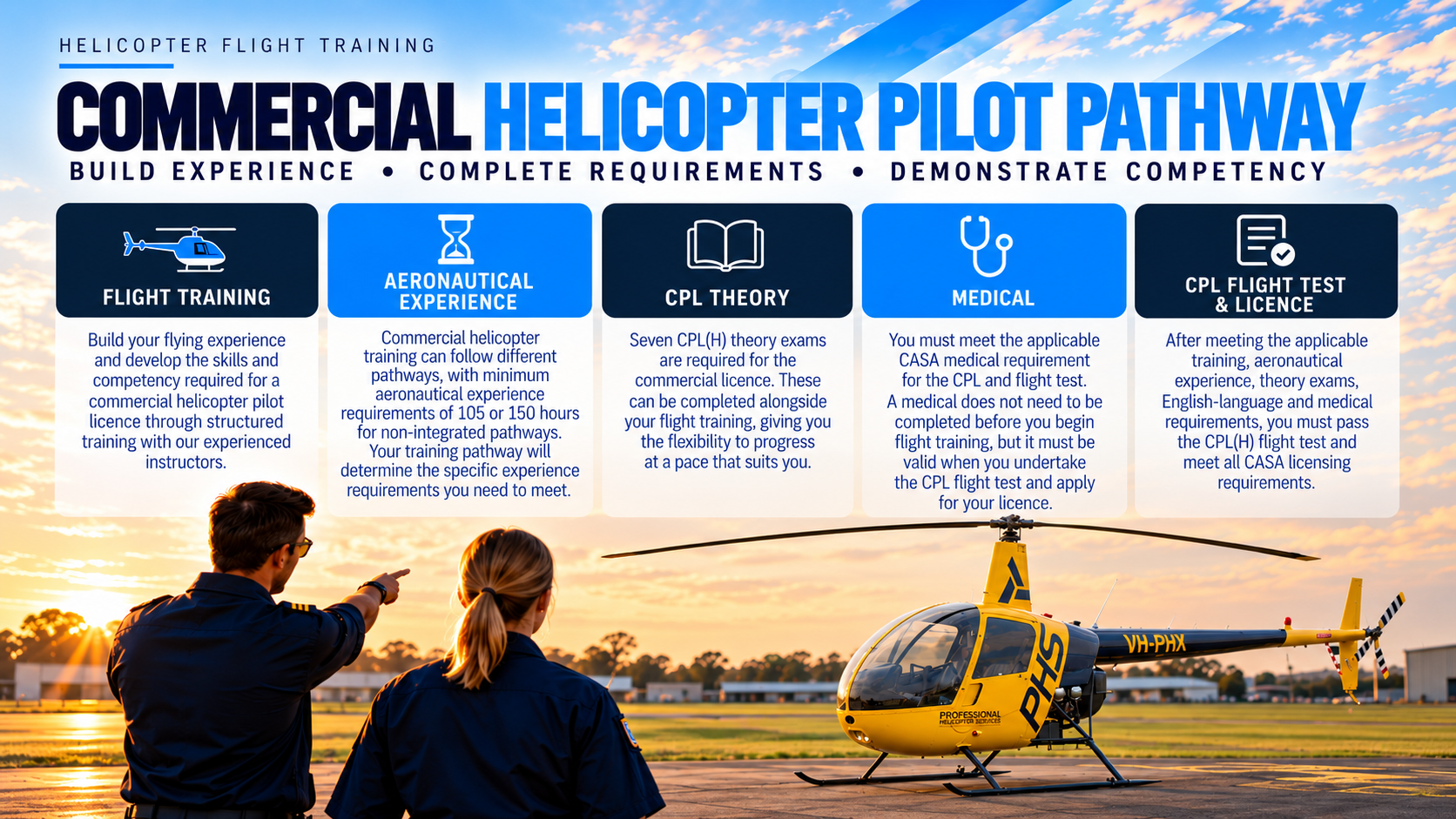
Commercial helicopter students have a larger theory commitment. CASA requires seven CPL helicopter subject exams covering areas such as air law, navigation, meteorology, human factors, aircraft knowledge, aerodynamics, performance and flight planning. These exams relate to the commercial pathway and are not something a beginner must complete before a first lesson.
What Changes if You Choose the Commercial Pathway
Commercial training has more detailed experience requirements. PHS’s current Student Pilot Handbook lists 105 hour and 150 hour commercial pathways. The 105 hour option has specific conditions around training structure and helicopter types. The right pathway depends on your course, existing experience and training consistency.
Discuss the course with us rather than choosing only by the headline number of hours. Minimum hours are only part of the process. Students must also meet the required competency standard, and commercial students need to complete the applicable CASA theory, medical and flight test requirements.
How Payment and Training Pace Can Work
Helicopter training is a significant investment, so it helps to understand how you can pay and how quickly you want to progress. We offer both pay as you go rates and prepaid 10 hour blocks for basic PPL and CPL flight training. The prepaid blocks have stated validity terms, so check the current rates and conditions before paying.
We also offer part time CPL theory classes in Melbourne. If you are planning your flight training, talk to our team about lesson availability at your preferred base and how often we recommend flying to maintain consistent progress.

What Happens After You Get a Licence
What comes next depends on why you learned to fly. A private pilot may simply keep flying recreationally and build experience within the licence privileges. You can add ratings or endorsements later if they suit the flying you want to do.
A commercial pilot will usually keep building experience for professional work. Depending on the role, that may include aircraft endorsements, instructor training, night flying or instrument qualifications. We provide advanced helicopter training for pilots ready to progress further.
Frequently Asked Questions About Becoming a Helicopter Pilot
Is a Trial Introductory Flight compulsory?
No. Our Trial Introductory Flight is an optional way to experience helicopter flying before committing to training, with no obligation to continue afterwards.
Do I need to decide between PPL and CPL before my first flight?
No. You can take a Trial Introductory Flight first. The choice becomes more important when you start planning regular lessons, theory, medical requirements and your training budget.
Do I need an aviation medical before a Trial Introductory Flight?
No. We do not require an aviation medical for a Trial Introductory Flight. Medical requirements become relevant as you progress towards a licence and depend on the pathway you choose.
Can I start with a PPL and later work towards a CPL?
Possibly. If you already have PPL training or experience, we can review your logbook and training history to help determine what may count towards a CPL pathway and what you still need to complete.
Can I pay for training as I go?
Yes. We offer pay as you go training as well as prepaid 10 hour blocks. Check our current rates and conditions before enrolling.
Take the Next Step That Fits Where You Are Now
If you have never flown a helicopter before, start with a Trial Introductory Flight. If you have already tried flying and want to continue, ask the PHS training team about lesson availability, aircraft, pricing and your first stage of training.
If you already know that you want a Private Pilot Licence or Commercial Pilot Licence, ask about course structure, medical requirements, theory, flight hours, payment options and any credit for previous experience. You only need to know which next step makes sense for where you are now.
Ready to take the next step? Contact the PHS flight training team to discuss your experience, goals and training options.